
Camp Info
| Ages: | 11–17 |
| Type: | Overnight |
| Gender: | Co-Ed |
| Setting: | Coast |
| Lodging: | Dorm |
| Sports: | Multisport |
| Water: | Boating, Kitesurfing, Paddleboarding, Pool, Swimming, Wakeboarding, Windsurfing |
| Academics: | English Language |
| Sleeps: | 2 |
| Meals Qty: | 3-meals a day |


Redondo Beach, CA, USA
\Accredited by the Commission on English Language Program Accreditation
Malibu Teen English Camp: An Unforgettable Summer Adventure
Presented by Internexus Los Angeles on the campus of Pepperdine University-Malibu
Give your teen a summer full of learning English, fun and safe adventures, and lifelong friendships. Held at Pepperdine University's beautiful Malibu Campus.
Where Academic Focus Meets Coastal Serenity
When you send your teen away for a summer program, you want more than just a syllabus; you want the assurance that they are in an environment that nurtures their independence while prioritizing their safety. Hosted on the stunning 830-acre Malibu campus of Pepperdine University, our program offers a rare blend of world-class facilities and the security of a gated, close-knit community.
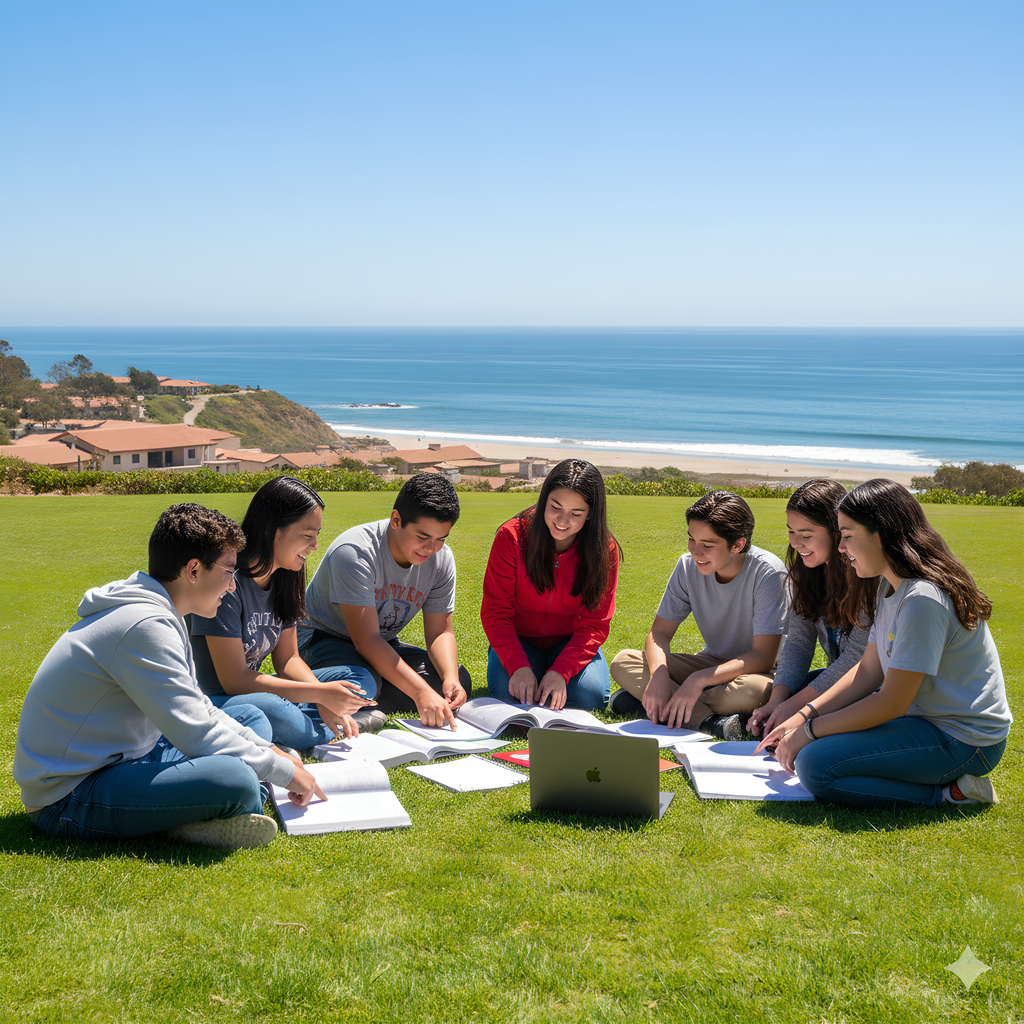
Often described as looking more like a Mediterranean resort than a university, the campus is nestled in the rolling foothills of the Santa Monica Mountains, directly overlooking the Pacific Ocean. Your teen will wake up to fresh sea breezes and panoramic views that extend all the way to Catalina Island. The architecture—white stucco buildings with red-tiled roofs—creates a calming, inspiring atmosphere that feels worlds away from the noise and distraction of the city, yet remains just a short drive from the cultural heart of Los Angeles.
???? Program Details
Dates: June 14 – July 26, 2026
Ages: 11 – 17 years old
Location: Pepperdine University, Malibu, California
Choose the program that best fits your teen’s learning and immersion goals:
Discoverer (Boarding $2,499/week Day $1399/week): Focuses on learning English while exploring the fascinating culture of Los Angeles.
Explorer (Boarding $2,799/week Day $1699/week): Designed for those who want to go beyond the classroom, including a "Theme Park Friday" or a weekend excursion.
Adventurer (Boarding $3,299/week Day $1999/week): The ultimate LA experience, featuring both Theme Park Fridays and full weekend day trips.
We know that for parents, safety is the non-negotiable baseline. The Pepperdine campus is renowned for its safety standards. It functions as a gated community with restricted access points monitored 24/7 by the Department of Public Safety (DPS).
24-Hour Security: Trained officers patrol the campus round-the-clock.
Controlled Access: Dormitories and key facilities utilize electronic access, ensuring only authorized students and staff can enter residence areas.
Emergency Support: The campus is equipped with comprehensive emergency response systems, including the LiveSafe app, which allows students to instantly connect with safety officials if needed.
Your teen will enjoy meals at the Waves Cafe (affectionately known as "The Caf"), a dining hub that offers far more than standard cafeteria fare. The facility features sweeping ocean views and a "farm-to-fork" philosophy, providing fresh, nutritious meals that cater to all dietary needs—including vegetarian, vegan, and gluten-free options.
The Social Hub: It’s a place for students to bond over meals, building friendships in a relaxed setting.
Coffee Culture: For a quick pick-me-up or a study session snack, there is a Starbucks located right inside the Payson Library, offering a familiar comfort of home.
Between classes and workshops, students are encouraged to stay active and embrace the California sunshine. The campus is designed for a healthy, outdoor lifestyle.
On-Campus: Students have access to recreational facilities including tennis courts, sand volleyball courts, and an Olympic-sized swimming pool. The "Alumni Park" offers acres of green lawn for frisbee, reading, or simply watching the sunset.
Nature at the Doorstep: For the adventurous, the campus connects to safe, scenic hiking trails in the Santa Monica Mountains, offering a chance to disconnect from screens and reconnect with nature.
This location offers your teen the best of both worlds: the excitement of a Los Angeles-adjacent program and the safety, beauty, and tranquility of a private coastal haven.
At a Glance: Why Parents Love Our Location
Features That Benefit Your Teen
Gated Campus
High-level security with 24/7 monitoring ensures peace of mind.
Ocean Views
A calming, beautiful environment that reduces stress and aids focus.
Nutritious Dining
"The Caf" and Starbucks provide healthy fuel for growing minds.
Active Lifestyle
Access to pool, tennis, volleyball, and hiking promotes physical health.
Included Meals: The program includes three meals per day: breakfast, lunch, and dinner. Scheduled off campus activities include a bag lunch (except for theme park visits)
At Pepperdine, dining is designed not just as a necessity but as a central part of the community experience, managed by Bon Appétit Management Company. Their philosophy centers on "farm-to-fork" freshness, meaning meals are cooked from scratch using seasonal, locally sourced ingredients rather than processed or frozen foods.
1. Waves Cafe ("The Caf")
Located in the Tyler Campus Center (TCC), this is the heart of campus dining. It features sweeping views of the Pacific Ocean and functions as a food hall with multiple stations serving diverse cuisines.
The Stations: Options rotate daily and include a global food station, a grill for burgers and sandwiches, a wood-fired pizza oven, a massive salad bar, and a dedicated dessert section.
The Vibe: It is a social hub where students gather between classes. The seating area includes both indoor tables and an outdoor patio overlooking the ocean.
2. Nature’s Edge
Also located in the Tyler Campus Center, this is a "grab-and-go" convenience market. It is ideal for students who need a quick snack between activities. It stocks fresh fruit, bottled beverages, yogurts, and packaged sandwiches.
3. Starbucks
Located inside the Payson Library, this is a fully functioning Starbucks. It is a popular spot for students to grab coffee and pastries while studying or meeting with friends.
4. The HAWC Cafe
Located in the Howard A. White Center (HAWC), this facility is often open later than the main cafeteria. It typically serves comfort foods like breakfast burritos, smoothies, and grilled items, making it a favorite for late-night study sessions.
Accommodations for Specialized Diets
Pepperdine and Bon Appétit take food allergies and dietary preferences seriously. They use a clear labeling system and have dedicated stations to ensure safety.
This is the most critical feature for parents of children with severe allergies. Located within the Waves Cafe, the Minus-9 Station prepares food exclusively without the top nine allergens:
No: Peanuts, Tree Nuts, Wheat/Gluten, Soy, Dairy, Eggs, Shellfish, Fish, or Sesame.
Safety: Meals here are prepared in a dedicated area to minimize cross-contact risk, offering peace of mind for students who usually struggle to find safe options in a cafeteria setting.
Vegan Station: The Caf features a dedicated station (often part of the "Global" or "Plant-Based" section) that serves fully vegan entrees for every meal period.
Salad Bar: The extensive salad bar provides high-quality plant-based proteins (tofu, beans, quinoa) and fresh vegetables, allowing students to build substantial, healthy meals.
Labeling: Menus feature the ↓G symbol, indicating dishes made without gluten-containing ingredients.
Important Safety Note: While the Minus-9 station is strictly controlled, the rest of the cafeteria uses open kitchens. Therefore, the university labels these items "Made without Gluten-Containing Ingredients" rather than "Certified Gluten-Free" to be transparent about the slight risk of airborne cross-contact in the general kitchen areas.
If your teen has a complex medical diet or severe airborne allergy, they are not left to navigate it alone.
Direct Access: Students can arrange a meeting with our staff upon arrival (or beforehand) to develop a personalized plan for safe dining.
Minus-9 Station (Free of top 9 allergens + gluten).
Vegetarian/Vegan
Dedicated vegan entrees at every meal; extensive salad bar with plant proteins.
Gluten-Free
↓G labeled menu items; gluten-free breads and cereals available upon request.
Kosher/Halal
While a full Kosher kitchen is not available, pre-packaged kosher meals can often be arranged, and the vegetarian options are suitable for many Halal diets.
A typical day at the Malibu English Language Camp is structured to balance focused learning with the freedom to explore Southern California. While the specific schedule varies by "Level" (Discoverer, Explorer, or Adventurer), the daily rhythm is consistent: mornings are for the mind, and afternoons/evenings are for social connection and adventure.
Here is what a typical class day looks like for a student at our camp.
7:30 AM – Wake Up & Ocean Breeze
Students wake up in their dorms to the sound of the Pacific Ocean.
Routine: After getting ready, they head out across the beautiful, landscaped campus. The morning walk to the dining hall is often a highlight—sunny, safe, and scenic.
Breakfast: They meet friends at the Waves Cafe ("The Caf") for a hot breakfast. Whether they want eggs and toast, fresh fruit and yogurt, or just a bagel, it's fueling up time. It’s also the first social hour of the day, chatting with roommates from countries like Italy, Brazil, Turkey, or Japan.
Classes begin promptly at 9:00 AM.
The Vibe: This isn't a stiff, silent lecture hall. Classes are interactive and communicative, taught by certified ESL professionals.
The Work: Students are grouped by proficiency level. A typical lesson might involve debating a pop-culture topic, working on a group presentation about Los Angeles culture, or practicing "real world" English they will use later that day during an excursion.
Break: There’s usually a mid-morning break where students grab a snack or visit the campus Starbucks to recharge.
Classes end, and the "camp" atmosphere takes over.
Lunch: Back at the Waves Cafe, students grab lunch. The diverse food stations (Global, Grill, Salad Bar) mean they never get bored. This is prime time for practicing English in a relaxed setting—discussing the morning's lessons or planning the evening's outfit.
This is where the Malibu English Camp shines. Depending on the day, the afternoon splits into two types of experiences:
Scenario A: The Excursion (4 days a week) Students board private buses for a curated trip.
Destination: They might head to Santa Monica Pier to ride the Ferris wheel, visit the Getty Museum for some culture, or tour the Hollywood Walk of Fame.
Goal: These aren't just sightseeing trips; they are language labs. Students have tasks—like asking for directions or ordering food—that force them to use their English skills in the real world.
Scenario B: On-Campus Recreation On days without major off-campus trips, students utilize Pepperdine’s resort-like facilities.
Active: Playing soccer on the intramural fields, swimming in the Olympic-sized pool, or playing tennis.
Relaxed: hanging out at Alumni Park, a massive green lawn with direct ocean views, playing frisbee or just reading.
Dinner is the community gathering point. After a busy afternoon, everyone reconvenes at the dining hall. It’s a louder, more energetic meal as students swap stories about their trips to Hollywood or who won the volleyball match.
The evenings are designed to build friendships and keep teens engaged so they aren't just isolating in their rooms.
Social Events: Examples include a talent show, karaoke, a games night, or a movie night in one of the campus amphitheaters.
Sunset: Many evenings include simply watching the sunset over the Pacific—a daily ritual at Pepperdine.
Students return to their residence halls.
Common Room: This is "chill time." They might play card games, order a late-night pizza, or call parents back home.
Check-In: Counselors do a nightly check-in to ensure everyone is present and feeling good.
After a long day of mental and physical activity, the campus quiets down. Security patrols continue through the night, ensuring a safe, peaceful sleep before the next day's adventure.
While the above is a typical weekday, Fridays and Weekends break the mold entirely:
Theme Park Fridays: A full day dedicated to Disneyland, Universal Studios, or Six Flags.
Weekend Adventures: For "Adventurer" level students, full-day trips to San Diego (Zoo/Safari) or Santa Barbara.
The heart of this program isn't just the location; it's the quality of the mentorship. We understand that for a parent, the "who" is just as important as the "where."
At the Malibu English Language Camp, the classroom experience is led by true professionals, not just temporary summer staff. We maintain strict hiring standards to ensure your teen is learning from educators who understand the nuances of language acquisition.
Every English instructor in our program meets a rigorous baseline of professional criteria:
University Educated: Every teacher holds a minimum of a Bachelor’s Degree (undergraduate degree) from an accredited university. Many of our staff also hold Master’s degrees in Education or Linguistics.
Certified Experts: Beyond their degrees, instructors possess recognized English Language Teaching certifications (such as TEFL, TESOL, or CELTA). This ensures they aren't just native speakers, but trained educators who understand how to teach grammar, syntax, and pronunciation effectively.
Specialized Teen Training: Teaching teenagers requires a specific skillset—balancing authority with engagement. Our teachers undergo specialized training focused on adolescent pedagogy, ensuring they can keep classes dynamic, relatable, and effective for the teen age group.
The curriculum is designed to break the "fear barrier" that holds many students back from speaking.
Active Learning: You won't find students silently copying from a chalkboard. Our certified teachers utilize communicative language teaching methods, which prioritize interaction, debate, and collaboration over rote memorization.
Real-World Application: The classroom is just the starting point. The program is structured so that the lessons learned in the morning (e.g., "How to ask for clarification," "Describing preferences," or "American idioms") are immediately useful during the afternoon excursions.
Mentorship: Because our teachers are experienced professionals, they act as academic mentors, identifying individual areas where a student needs help—whether it’s refining an accent or building the vocabulary to express complex ideas.
The Result: Students don't just leave with a notebook full of grammar rules; they leave with the confidence to speak up, participate, and navigate an English-speaking environment independently.
The “Suite Life” at Pepperdine
Unlike varied single or double rooms in a long hallway, Pepperdine’s undergraduate housing is typically organized into Suites. Students attending the language camp can generally expect:
Double Occupancy Rooms: Camp participants are almost always paired in double rooms (two twin beds per room).
The Suite Configuration: A typical suite consists of four bedrooms clustered around a shared common living area and a shared bathroom.
Capacity: Each suite houses approximately 8 students (4 bedrooms x 2 students).
Living Area: The suite includes a furnished common room (sofas, coffee table) where students can socialize comfortably away from their sleeping quarters.
Bathroom: The suite shares a large bathroom containing dual sinks, two private shower stalls, and two toilet stalls. This ratio (approx. 1 bathroom for 8 students) is quite standard for university summer programs.
Natural Ventilation (No A/C): It is important to note that most dorms at Pepperdine do not have air conditioning. The campus architecture relies on the cool Pacific Ocean breeze for "natural cooling."
Tip: The temperature drops significantly at night in Malibu. Windows usually have screens so they can be left open safely to let the breeze in.
Laundry: There are communal laundry facilities located within or near the residential complex (typically card or app-operated).
Wi-Fi: High-speed university internet is accessible throughout the dorms and campus grounds.
Views: Pepperdine is famous for its location. Many suites feature views of the Pacific Ocean or the Santa Monica Mountains.
The "room and board" package utilizes the university's premier dining facilities:
The Waves Cafe: Students will likely eat at the main dining hall, often referred to as "The Caf." It is known for having an outdoor terrace with sweeping panoramic views of the ocean.
Meal Style: Meals are typically served cafeteria-style with various stations (hot entrees, salad bar, sandwiches, drinks).
Dietary Needs: The university is well-versed in accommodating international and diverse dietary restrictions (vegetarian, gluten-free, etc.).
The "comfortable and safe" description is accurate due to the campus's unique geography:
Gated Community: The Pepperdine campus is private and gated. Access is strictly controlled at guard booths, and the Department of Public Safety (DPS) patrols 24/7.
Terrain: The campus is built into the hills. While this provides safety and seclusion, it also means walking between the dorms and the classrooms/cafeteria can involve hills and stairs.
Safety & Supervision
The program prioritizes safety by hosting the camp on a "safe Malibu campus" and providing "safe dorm accommodations." Although specific supervision ratios are not detailed in the provided text, the program covers "all activity transportation" to ensure students are moved safely between locations.
Airport Transfer Assistance
Airport pickup and return are included as part of all of our program levels. We will have a representative at the airport to greet your teen when they arrive and safely transport them to the Pepperdine Campus.
All participants receive a certificate of achievement detailing the level of English studied during their stay. .
Our staff is highly experienced with helping students navigate their entry into the United States. This program is designed for students visiting on tourist (B2) visas or visa waiver status.
Day students enjoy the same activities and program elements as residential students, including lunches and dinners. They should plan to arrive shortly before the beginning of classes and departing after the last group activity of the day. Parents and Guardians are responsible for transporting their day students to and from the camp.
The most critical advice for Malibu is to pack for two climates: warm, sunny California days and surprisingly cool, breezy coastal nights.
Sweatshirts/Hoodies (2-3): Essential. As soon as the sun goes down, the ocean breeze chills the campus.
T-Shirts/Tops (7-10): Casual wear is the standard.
Long Pants/Jeans (2-3 pairs): You will need these for the evenings or cooler days.
Shorts (3-4 pairs): For daytime activities and sports.
Comfortable Walking Shoes: The Pepperdine campus is built into steep hills with many stairs. You will walk a lot.
Beachwear: Swimsuit (2), beach towel, and flip-flops/sandals.
Nice Outfit (1): One "smart casual" outfit (collared shirt/dress pants or a dress) for a graduation ceremony or a final banquet is standard for language camps.
Undergarments & Socks: Enough for 10 days (laundry is usually done weekly).
Shower Shoes: Flip-flops specifically for the shower are highly recommended since bathrooms are shared.
Toiletries Carrier: A "shower caddy" or small bag to carry your soap/shampoo from your bedroom to the shared bathroom.
Bath Towel: Even if the camp provides linens, an extra towel is often recommended.
Personal Fan: Pro Tip: The dorms do not have A/C. A small clip-on or desk fan is a lifesaver for warm afternoons.
Laundry Bag: A mesh bag to transport dirty clothes to the laundry room.
Sunscreen & Hat: The California sun is strong, even when it feels breezy.
US Power Adapter: If you are international, you need a Type A or Type B adapter.
Power Strip: Useful if you have multiple devices (phone, laptop, fan) to charge.
Notebook & Pens: Basic stationery for classes.
Translator/Dictionary: A physical or electronic dictionary (check if teachers allow phones in class).
Headphones: For listening practice or downtime in the dorm.
Reusable Water Bottle: There are filling stations all over campus.
Spending Money: For snacks at the "Waves Cafe," souvenirs, or extra trips. A debit/credit card is preferred over large amounts of cash.
Laundry Payment: Pepperdine laundry machines typically use an app (like PayRange) or credit/debit cards. It is less common to need quarters now, but checking the specific camp packet is wise.
The camp provides a "linen packet" (sheets, pillow, blanket).
Expensive Valuables: Jewelry or high-end electronics that you don't need for study.
Prohibited Items: Hot plates, candles, incense, or any heating elements (strictly banned in dorms).
Too much cash: Carry small amounts only.
We follow a "Classroom Ban & Activity Restriction" model.
During Class (9:00 AM – 1:00 PM): Strict "Out of Sight" rule. Phones must be switched off or on silent and kept in backpacks. If a phone is seen or heard during class, it is usually confiscated until the end of the day.
During Activities: Phones are generally discouraged during afternoon sports or excursions to ensure students are socializing. Staff may ask students to put them away if they are "glued to screens."
Nighttime: For younger teens (ages 10-14), we reserve the right to collect phones at "lights out" (around 10:00 PM or 10:30 PM) to ensure sleep. For older teens (15+), they may be allowed to keep them, provided they do not make noise.
Strict Dorm Privacy
Rule: Absolutely NO photos or videos inside the dorm bedrooms or bathrooms.
Consequence: This is treated as a major disciplinary offense (bullying/privacy violation) and can lead to immediate expulsion.
"Walking Zombie" Ban
Rule: Students are not allowed to walk around the hilly campus while looking down at their phones.
Consequence: Staff will stop students for safety; Pepperdine has many stairs and uneven paths.
WiFi Curfew Rule: While the University WiFi is 24/7, specific "Camp WiFi" passwords may be changed or routers in specific dorm blocks may be restricted late at night to force sleep.
Our teaching approach is based on Communicative Language Teaching (CLT) and Project-Based Learning (PBL) methodologies, which are the industry gold standards for teen summer programs.
At Malibu English Camp, the goal is fluency over accuracy. We want students to speak without fear, so the curriculum moves away from textbooks and toward interaction.
Level: Intermediate (B1/B2) | Age Group: 13–17
Weekly Theme: "California Culture & The Modern Teen" (Tailored to the Malibu context)
By the end of the week, students will be able to:
Speaking: Confidently express opinions on pop culture and debate simple global topics.
Listening: Understand natural, fast-paced English through music, vlogs, and peer interviews.
Reading: Scan real-world texts (blogs, signs, menus) for key information.
Writing: collaborate on a creative script or social media "captioning" project.
Time Block
Activity Type
Focus
09:00 – 10:15
The "Spark" Session
Grammar in Context, Vocabulary, & Reading (High Focus)
10:15 – 10:45
Break
Socializing & Snacks (Crucial for informal English)
10:45 – 12:00
The "Studio" Session
Project Work, Role-Plays, & Creative Writing (Collaboration)
12:00 – 13:00
The "Action" Hour
Games, Music, Drama, & Review (High Energy)
09:00 – 10:15 (Input):
Activity: "The Museum of Me." Students select 3 photos from their phones to describe their life back home.
Skill: Adjectives of personality, present tense for habits.
10:45 – 12:00 (Output/Project):
Project: "Find Someone Who..." Bingo. Students interview peers to find specific traits (e.g., "Has visited 3 countries," "Plays guitar").
Skill: Asking follow-up questions (not just "Yes/No").
12:00 – 13:00 (Active):
Game: Two Truths and a Lie.
Goal: Identifying deception/nuance in speech.
09:00 – 10:15 (Input):
Activity: Reading "weird" California laws and decoding American slang (e.g., "The 405," "Stoked," "Bummer").
Skill: Modal verbs (Must/Can/Should).
10:45 – 12:00 (Output/Project):
Project: The "Lost in LA" Role-Play. In pairs, students script a problem (lost wallet, ordering a complicated coffee, asking for directions) and act it out.
Skill: Politeness markers & indirect questions.
12:00 – 13:00 (Active):
Game: Directions Maze. Blindfolded student must be guided through a classroom "obstacle course" by a partner using only English directions.
09:00 – 10:15 (Input):
Activity: "Lyric Lab." Students listen to a current Top 40 song, fill in the gaps, and analyze the meaning of the slang used.
Skill: Connected speech (how "going to" becomes "gonna").
10:45 – 12:00 (Output/Project):
Project: Vlog Squad. Small groups film a 2-minute "Campus Tour" video explaining their favorite spots on campus.
Skill: Presentation skills & descriptive vocabulary.
12:00 – 13:00 (Active):
Game: Lip Sync Battle. Groups perform a song and explain why they chose it (justification).
09:00 – 10:15 (Input):
Activity: Review of the week's "Error Board" (funny mistakes collected by the teacher throughout the week).
Skill: Self-correction & grammar review.
10:45 – 12:00 (Output/Project):
Project: Final Presentations. Groups present their "Vlog Tours" (filmed Wednesday) or perform their "Role-Plays" (from Tuesday) for the class.
Skill: Public speaking confidence.
12:00 – 13:00 (Active):
Activity: Graduation Ceremony Handing out "Superlative Awards" (e.g., "Most Likely to Be President," "Best American Accent").
???? What Our Students Say
"My English speaking grew a lot. Outside of class, the activities were great. We explored a lot of LA... the full-day trips to Universal Studios and Disneyland were great."
— Luis K., Summer 2025
“The best part was the activities and trips. We had a great time exploring Los Angeles – museums, shopping, and even Disneyland!”
— Vini N., Summer 2025
???? Ready to Start Your Teen’s Adventure?
We keep classes small and comfortable so there are limited spaces available. So if your teen wants to improve their English and explore California, Malibu English Camp is their first step to fun, learning, and lifelong friendships.
*Malibu English Camp is presented by Internexus Los Angeles. Pepperdine University is not a sponsor of this program.
At a Glance: Why Parents Love Our Location
Features That Benefit Your Teen
Gated Campus
High-level security with 24/7 monitoring ensures peace of mind.
Ocean Views
A calming, beautiful environment that reduces stress and aids focus.
Nutritious Dining
"The Caf" and Starbucks provide healthy fuel for growing minds.
Active Lifestyle
Access to pool, tennis, volleyball, and hiking promotes physical health
| Ages: | 11–17 |
| Type: | Overnight |
| Gender: | Co-Ed |
| Setting: | Coast |
| Lodging: | Dorm |
| Sports: | Multisport |
| Water: | Boating, Kitesurfing, Paddleboarding, Pool, Swimming, Wakeboarding, Windsurfing |
| Academics: | English Language |
| Sleeps: | 2 |
| Meals Qty: | 3-meals a day |
| Dates | Days | Price | Apply |
|---|---|---|---|
| Jun 14 - Jun 28, 2026 | 15 | $4,998 | |
| Jun 14 - Jun 28, 2026 | 15 | $5,998 $5,698 | |
| Jun 14 - Jun 28, 2026 | 15 | $6,598 $6,268 | |
| Jun 28 - Jul 12, 2026 | 15 | $4,998 | |
| Jun 28 - Jul 12, 2026 | 15 | $5,998 $5,698 | |
| Jun 28 - Jul 12, 2026 | 15 | $6,598 $6,268 | |
| Jul 12 - Jul 26, 2026 | 15 | $4,998 | |
| Jul 12 - Jul 26, 2026 | 15 | $5,998 $5,698 | |
| Jul 12 - Jul 26, 2026 | 15 | $6,598 $6,268 |
You won’t be charged yet. The camp will contact you to confirm all terms first.
The “Suite Life” at Pepperdine
Unlike varied single or double rooms in a long hallway, Pepperdine’s undergraduate housing is typically organized into Suites. Students attending the language camp can generally expect:
Double Occupancy Rooms: Camp participants are almost always paired in double rooms (two twin beds per room).
The Suite Configuration: A typical suite consists of four bedrooms clustered around a shared common living area and a shared bathroom.
Capacity: Each suite houses approximately 8 students (4 bedrooms x 2 students).
Living Area: The suite includes a furnished common room (sofas, coffee table) where students can socialize comfortably away from their sleeping quarters.
Bathroom: The suite shares a large bathroom containing dual sinks, two private shower stalls, and two toilet stalls. This ratio (approx. 1 bathroom for 8 students) is quite standard for university summer programs.
Natural Ventilation (No A/C): It is important to note that most dorms at Pepperdine do not have air conditioning. The campus architecture relies on the cool Pacific Ocean breeze for "natural cooling."
Tip: The temperature drops significantly at night in Malibu. Windows usually have screens so they can be left open safely to let the breeze in.
Laundry: There are communal laundry facilities located within or near the residential complex (typically card or app-operated).
Wi-Fi: High-speed university internet is accessible throughout the dorms and campus grounds.
Views: Pepperdine is famous for its location. Many suites feature views of the Pacific Ocean or the Santa Monica Mountains.
The "room and board" package utilizes the university's premier dining facilities:
The Waves Cafe: Students will likely eat at the main dining hall, often referred to as "The Caf." It is known for having an outdoor terrace with sweeping panoramic views of the ocean.
Meal Style: Meals are typically served cafeteria-style with various stations (hot entrees, salad bar, sandwiches, drinks).
Dietary Needs: The university is well-versed in accommodating international and diverse dietary restrictions (vegetarian, gluten-free, etc.).
The "comfortable and safe" description is accurate due to the campus's unique geography:
Gated Community: The Pepperdine campus is private and gated. Access is strictly controlled at guard booths, and the Department of Public Safety (DPS) patrols 24/7.
Terrain: The campus is built into the hills. While this provides safety and seclusion, it also means walking between the dorms and the classrooms/cafeteria can involve hills and stairs.
Safety & Supervision
The program prioritizes safety by hosting the camp on a "safe Malibu campus" and providing "safe dorm accommodations." Although specific supervision ratios are not detailed in the provided text, the program covers "all activity transportation" to ensure students are moved safely between locations.
Airport Transfer Assistance
Airport pickup and return are included as part of all of our program levels. We will have a representative at the airport to greet your teen when they arrive and safely transport them to the Pepperdine Campus.
All participants receive a certificate of achievement detailing the level of English studied during their stay.
Our staff is highly experienced with helping students navigate their entry into the United States. This program is designed for students visiting on tourist (B2) visas or visa waiver status.
Where Academic Focus Meets Coastal Serenity
When you send your teen away for a summer program, you want more than just a syllabus; you want the assurance that they are in an environment that nurtures their independence while prioritizing their safety. Hosted on the stunning 830-acre Malibu campus of Pepperdine University, our program offers a rare blend of world-class facilities and the security of a gated, close-knit community.
Often described as looking more like a Mediterranean resort than a university, the campus is nestled in the rolling foothills of the Santa Monica Mountains, directly overlooking the Pacific Ocean. Your teen will wake up to fresh sea breezes and panoramic views that extend all the way to Catalina Island. The architecture—white stucco buildings with red-tiled roofs—creates a calming, inspiring atmosphere that feels worlds away from the noise and distraction of the city, yet remains just a short drive from the cultural heart of Los Angeles.
The food service offers a wide variety of different options.
The campus includes tracks, tennis courts, swimming pools, and fields built for NCAA-level play.
Green Spaces Besides sports, the campus has many green areas for relaxation, talks, and casual activities, all with stunning ocean views.
Access to medical care is an essential part of our program
To help children stay connected with their parents, the campus offers
A typical day at the Malibu English Language Camp is structured to balance focused learning with the freedom to explore Southern California. While the specific schedule varies by "Level" (Discoverer, Explorer, or Adventurer), the daily rhythm is consistent: mornings are for the mind, and afternoons/evenings are for social connection and adventure.
Here is what a typical class day looks like for a student at our camp.
7:30 AM – Wake Up & Ocean Breeze
Students wake up in their dorms to the sound of the Pacific Ocean.
Routine: After getting ready, they head out across the beautiful, landscaped campus. The morning walk to the dining hall is often a highlight—sunny, safe, and scenic.
Breakfast: They meet friends at the Waves Cafe ("The Caf") for a hot breakfast. Whether they want eggs and toast, fresh fruit and yogurt, or just a bagel, it's fueling up time. It’s also the first social hour of the day, chatting with roommates from countries like Italy, Brazil, Turkey, or Japan.
Classes begin promptly at 9:00 AM.
The Vibe: This isn't a stiff, silent lecture hall. Classes are interactive and communicative, taught by certified ESL professionals.
The Work: Students are grouped by proficiency level. A typical lesson might involve debating a pop-culture topic, working on a group presentation about Los Angeles culture, or practicing "real world" English they will use later that day during an excursion.
Break: There’s usually a mid-morning break where students grab a snack or visit the campus Starbucks to recharge.
Classes end, and the "camp" atmosphere takes over.
Lunch: Back at the Waves Cafe, students grab lunch. The diverse food stations (Global, Grill, Salad Bar) mean they never get bored. This is prime time for practicing English in a relaxed setting—discussing the morning's lessons or planning the evening's outfit.
This is where the Malibu English Camp shines. Depending on the day, the afternoon splits into two types of experiences:
Scenario A: The Excursion (4 days a week) Students board private buses for a curated trip.
Destination: They might head to Santa Monica Pier to ride the Ferris wheel, visit the Getty Museum for some culture, or tour the Hollywood Walk of Fame.
Goal: These aren't just sightseeing trips; they are language labs. Students have tasks—like asking for directions or ordering food—that force them to use their English skills in the real world.
Scenario B: On-Campus Recreation On days without major off-campus trips, students utilize Pepperdine’s resort-like facilities.
Active: Playing soccer on the intramural fields, swimming in the Olympic-sized pool, or playing tennis.
Relaxed: hanging out at Alumni Park, a massive green lawn with direct ocean views, playing frisbee or just reading.
Dinner is the community gathering point. After a busy afternoon, everyone reconvenes at the dining hall. It’s a louder, more energetic meal as students swap stories about their trips to Hollywood or who won the volleyball match.
The evenings are designed to build friendships and keep teens engaged so they aren't just isolating in their rooms.
Social Events: Examples include a talent show, karaoke, a games night, or a movie night in one of the campus amphitheaters.
Sunset: Many evenings include simply watching the sunset over the Pacific—a daily ritual at Pepperdine.
Students return to their residence halls.
Common Room: This is "chill time." They might play card games, order a late-night pizza, or call parents back home.
Check-In: Counselors do a nightly check-in to ensure everyone is present and feeling good.
After a long day of mental and physical activity, the campus quiets down. Security patrols continue through the night, ensuring a safe, peaceful sleep before the next day's adventure.
While the above is a typical weekday, Fridays and Weekends break the mold entirely:
Theme Park Fridays: A full day dedicated to Disneyland, Universal Studios, or Six Flags.
Weekend Adventures: For "Adventurer" level students, full-day trips to San Diego (Zoo/Safari) or Santa Barbara.
All program levels will offer optional program extras
Specific program elements subject ot change with an equivalent program substitution.


